

Technical Guide · Commercial Poultry Management
Commercial Layer House Ventilation & Climate Control: The Complete Engineering Guide
Published by: TIANRUI Engineering & Farming Division | Updated: October 2026 | 8 min read
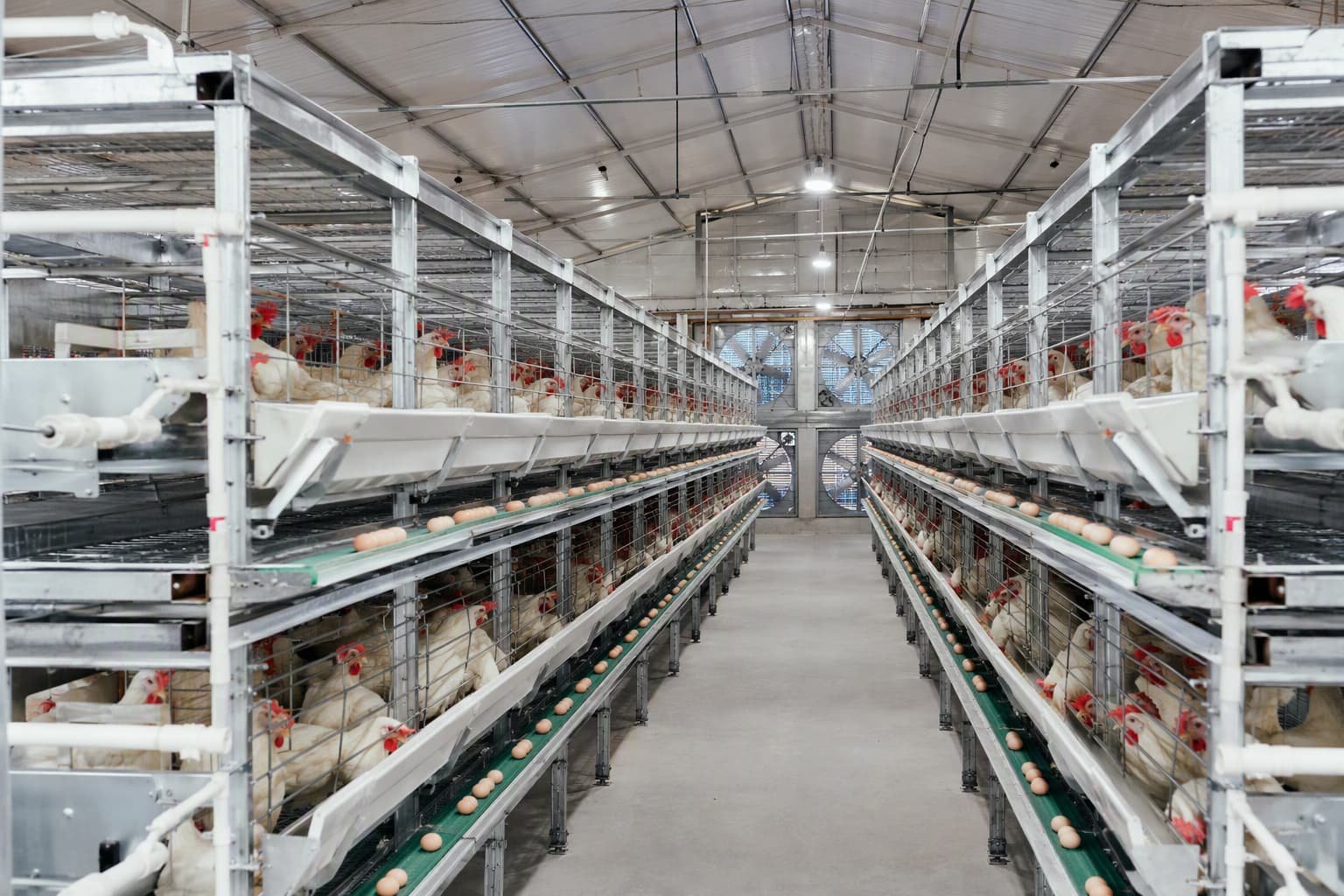
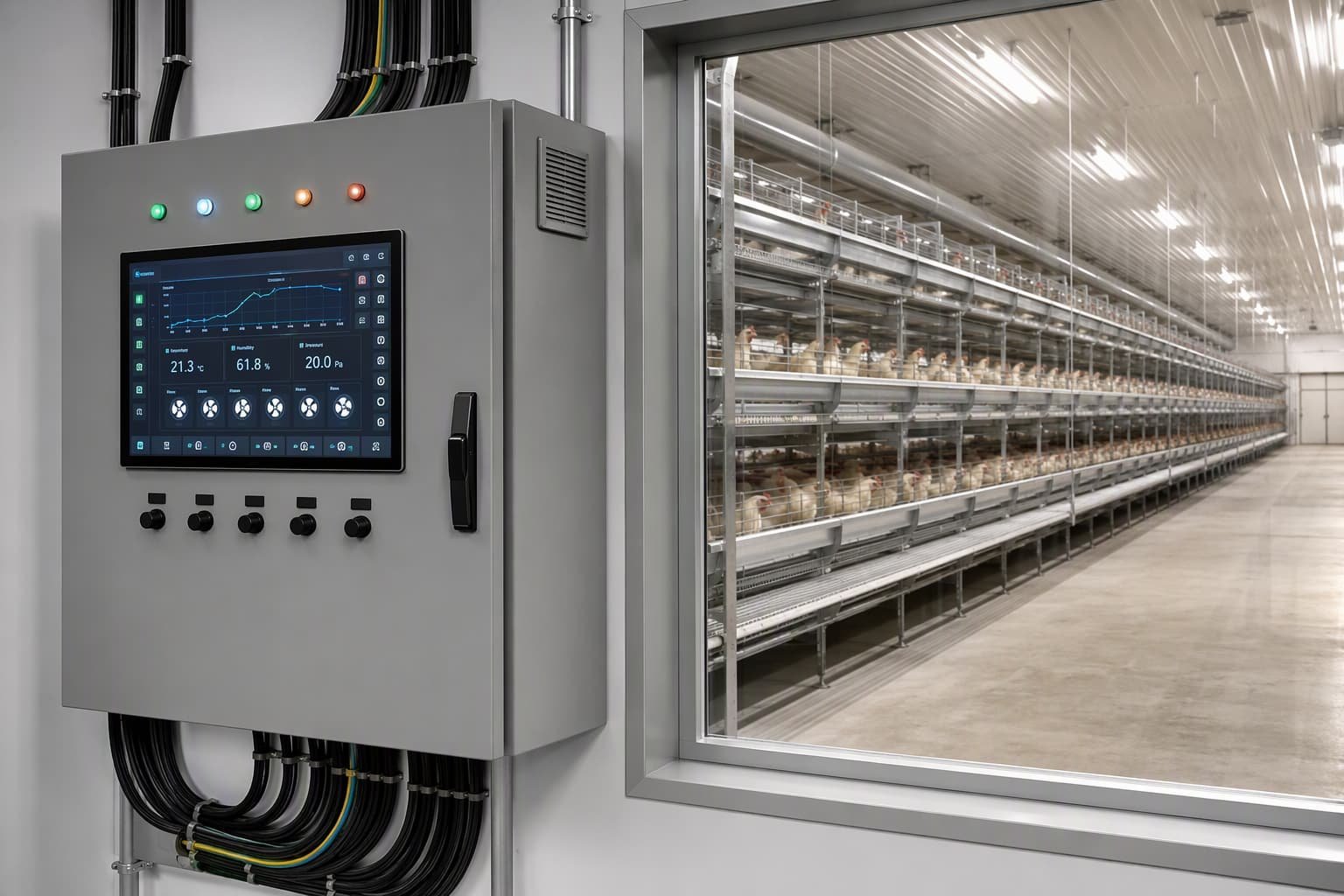
Quick Takeaway for Farm Managers: In multi-tier commercial layer housing, maintaining uniform temperature (21°C–24°C) and fresh air exchange is a direct driver of egg production and Feed Conversion Ratio (FCR). Effective climate management relies on smooth staging across three distinct ventilation modes: Minimum Ventilation, Transitional Ventilation, and Tunnel Ventilation. This guide breaks down the engineering equations, static pressure guidelines, and practical protocols tested across Tianrui's commercial demonstration farms.
1. The 3 Core Ventilation Modes in Modern Closed Poultry Houses
A closed, environmentally controlled layer house operates as an engineered ecosystem. Depending on external ambient conditions and bird age, the ventilation system must switch seamlessly between three distinct operational phases:
| Ventilation Mode | Primary Objective | Target Air Velocity | Static Pressure Range | Key Control Mechanism |
|---|---|---|---|---|
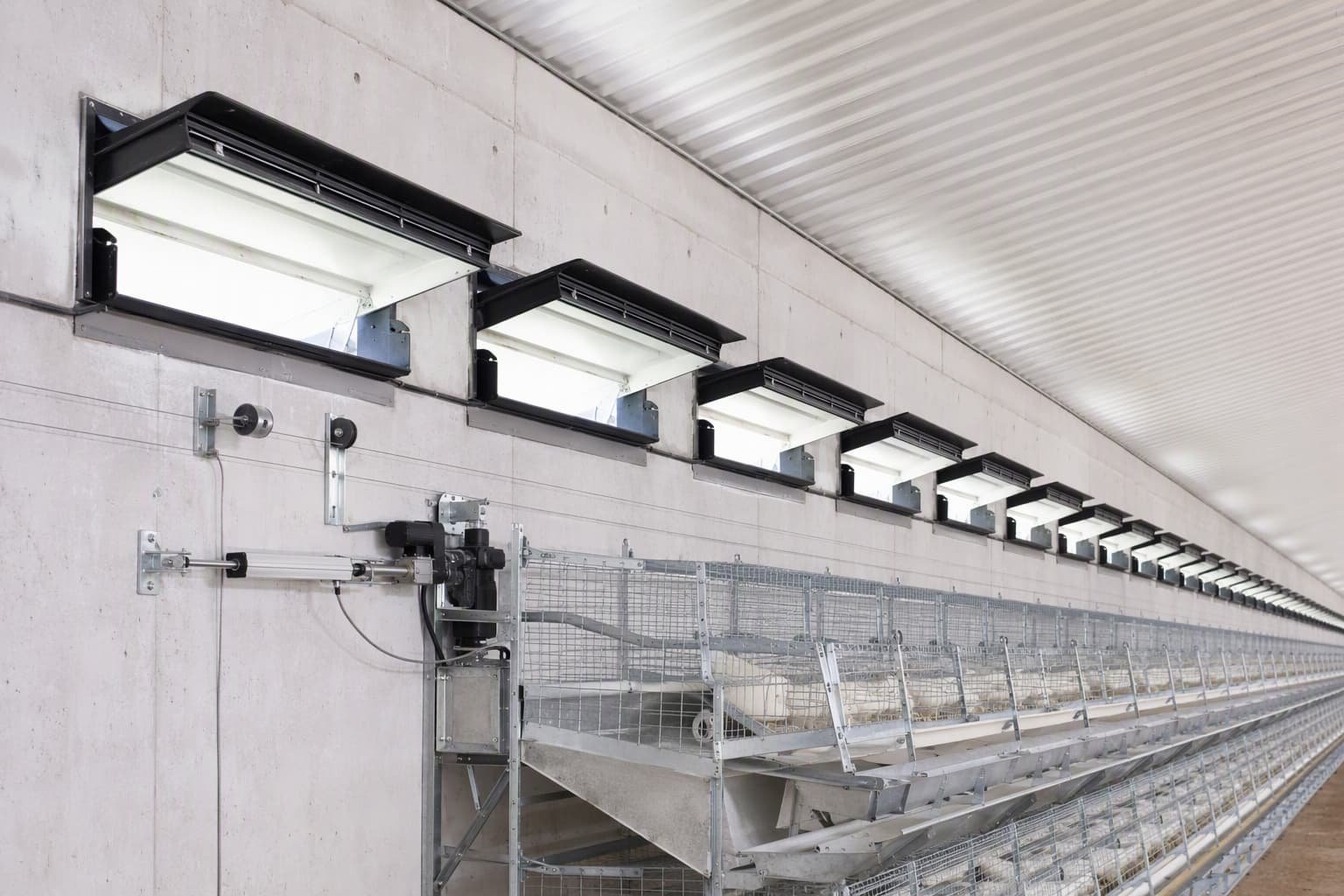
| Minimum Ventilation | Moisture & gas removal (CO₂ < 2,500 ppm, NH₃ < 15 ppm) without chilling birds. | Negligible at bird level (< 0.3 m/s) | 25 – 40 Pa (house width dependent) | Cycle timer, side-wall air inlets, small exhaust fans |
| Transitional Ventilation | Temperature regulation when ambient temperature matches target comfort band. | Low to moderate (0.5 – 1.2 m/s) | 20 – 30 Pa | Inlet opening adjustment, staging medium exhaust fans |
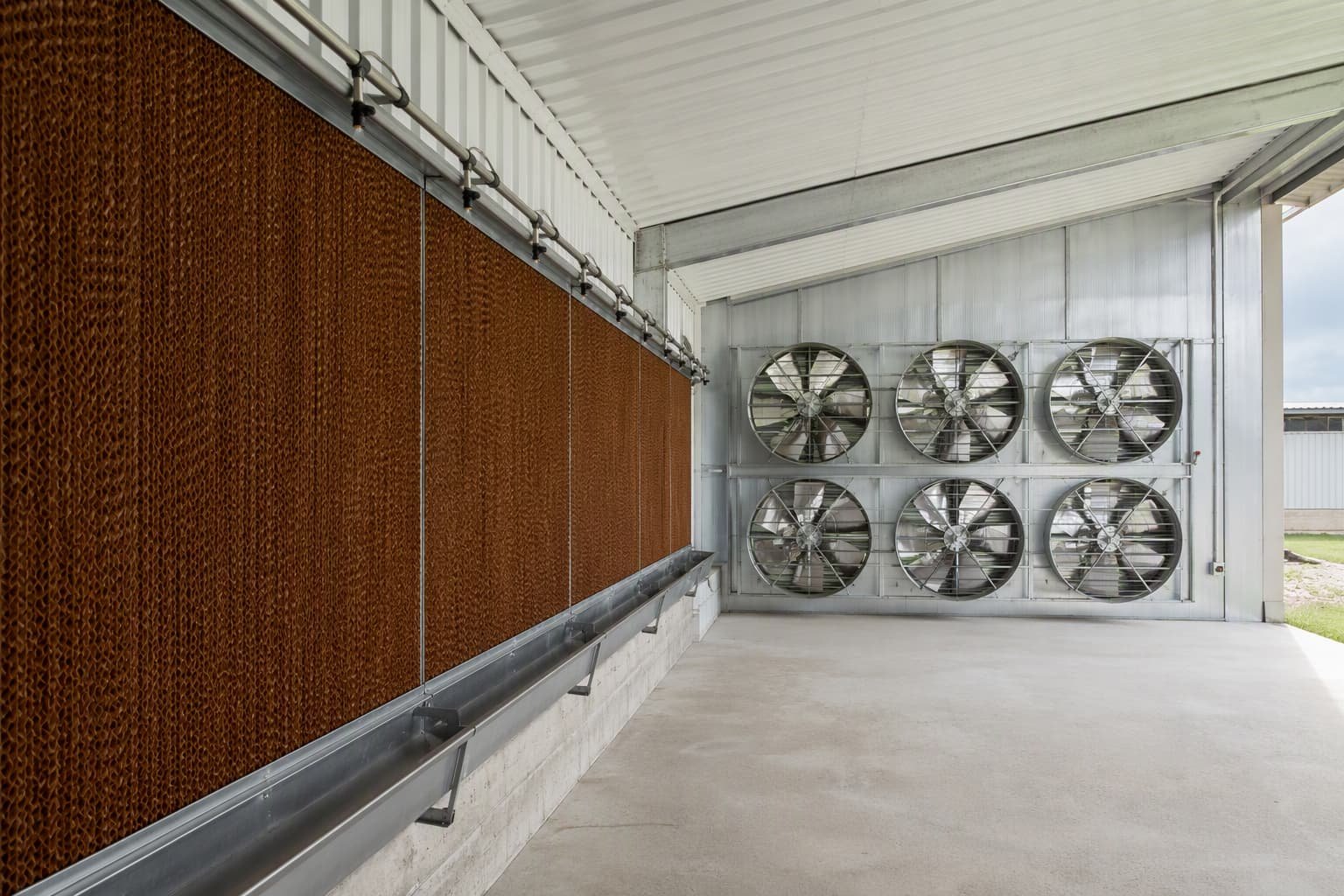
| Tunnel Ventilation | Heat removal via convective wind-chill cooling during warm/hot seasons. | 2.2 – 3.0 m/s throughout all tiers | 15 – 25 Pa | Large tunnel exhaust fans + evaporative cooling pads |
2. Calculating Minimum Ventilation Rate: The Baseline Formula
Minimum ventilation must be timer-driven rather than strictly temperature-driven. Even in cold winter conditions, metabolic moisture, carbon dioxide, and ammonia must be continuously purged.
The standard baseline calculation used by commercial engineers is based on total live body weight:
Minimum Airflow (m³/h) = Total Bird Count × Average Bird Weight (kg) × Minimum Ventilation Rate (m³/h/kg)
* Standard benchmark: 0.70 to 0.85 m³/h per kg of body weight at 20°C ambient base.
Example Calculation: For a house of 50,000 commercial layers with an average weight of 1.8 kg per hen:
Total Live Weight: 50,000 × 1.8 kg = 90,000 kg
Required Minimum Airflow: 90,000 kg × 0.80 m³/h/kg = 72,000 m³/h
If using 12,000 m³/h exhaust fans, this translates to 6 fans operating simultaneously, or controlled via a 5-minute cycle timer (e.g., 60 seconds ON / 240 seconds OFF with 2 fans).
3. Managing Micro-Climates in Multi-Tier H-Type Battery Cages
Multi-tier H-type cage systems (such as 4-tier to 8-tier configurations) concentrate high bird density within vertical space. Without proper engineering, standard tunnel ventilation creates two major hazards:
Vertical Temperature Gradient: Hot air naturally rises toward the ceiling, causing top-tier hens to experience heat stress while bottom-tier hens are over-chilled.
Airflow Dead Zones: Equipment frames, solid manure belts, and longitudinal partitions act as baffles that divert air into central aisles instead of circulating through cage interiors.
Engineering Solutions to Prevent Stratification:
Negative Pressure Jet Trajectory: Ensure side-wall inlet baffles direct cool incoming air toward the ridge peak at high velocity, allowing it to blend with rising house heat before descending into bird zones.
Under-Belt Manure Drying Circulation: Continuous manure belt cleaning coupled with longitudinal perforated duct air distribution eliminates pocket moisture and reduces ammonia generation at the source.
Longitudinal Air Speed Uniformity: Design tunnel fan capacity to achieve a minimum of 2.5 m/s air velocity through the effective cross-sectional free area of the barn.
4. Evaporative Cooling Pad Operating Protocol
Evaporative cooling is the primary defense against tropical and summer heatwaves, but misuse causes high humidity and severe respiratory stress.
Temperature Threshold: Do not activate water pumps on cooling pads until barn temperature exceeds 28°C (82.4°F) and relative humidity (RH) is below 75%.
Staged Water Bleed: Activate pads on interval cycles (e.g., 30s wet / 120s pause) rather than continuous flooding to maintain pad surface permeability.
Water Quality Control: Maintain recirculation pH between 6.5 and 8.0, and flush reservoirs weekly to prevent mineral scale accumulation and algae growth that choke airflow static pressure.
Frequently Asked Questions (FAQ)
Q1: What is the ideal static pressure for a 12-meter wide closed poultry house?
For a standard 12-meter wide barn during minimum ventilation, the optimal negative pressure is typically between 25 and 30 Pascals (Pa). This pressure differential ensures the high-speed air jet travels past the middle ceiling before mixing and falling into the bird zone.
Q2: How often should manure belts be operated to prevent ammonia buildup?
In high-density H-type layer systems, manure belts should ideally be operated every 2 to 3 days. Automated PP manure belts remove over 85% of latent ammonia and moisture from the facility, significantly reducing the ventilation burden required for air quality maintenance.
Q3: How does hot-dip galvanized steel affect poultry house climate durability?
Commercial poultry houses are exposed to extreme ammonia concentrations and high humidity. Standard pre-galvanized components deteriorate rapidly, causing structural failure. Heavy hot-dip galvanized structural steel (with zinc coating standards up to 275 g/m²) resists continuous washdown disinfectants and harsh environmental corrosion for an expected operational lifespan of 15–20 years.